Why “Stopping” Might Be the Most Underrated Leadership Skill
In the age of knowledge workers, the old cliché “information is power” rings truer than ever. Which is why withholding information has become not only extreme, but downright irritating.
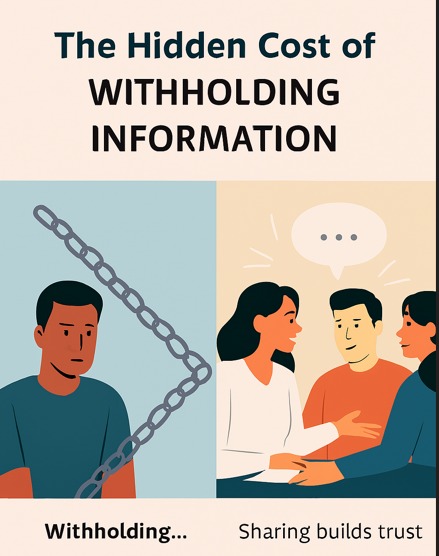
Intentionally withholding information doesn’t add value — it deletes it. Yet the motive is the same: to gain power. It’s the same old need to win, only more devious. And it shows up in subtle ways:
• People who exaggerate the virtue of secrecy, using it as an excuse to exclude others.
• Those who answer every question with another question, convinced that revealing anything puts them at a disadvantage.
• The passive-aggressive types who don’t return calls, ignore emails, or give only partial answers.
If you don’t understand why this behavior annoys people, think about these moments:
• A meeting you weren’t told about.
• A memo or email you weren’t copied on.
• A situation where you were the last person to learn something important.
The truth is, not sharing information rarely achieves the intended effect. You may think you’re consolidating power, but in reality you’re breeding mistrust. Real power comes not from secrecy, but from inspiring loyalty.
Withholding information is often a misplaced need to win. Sometimes it’s deliberate — a Machiavellian tactic to divide and conquer. But more often, it’s unintentional. We withhold information when we’re too busy to respond, when we forget to include someone in a discussion, or when we delegate a task without explaining it properly.
Most of us don’t mean to keep people in the dark. We simply fail to get around to sharing. But over time, this neglect looks exactly like intentional withholding. And in the eyes of colleagues, the result is the same: mistrust, frustration, and disengagement.
So how do you stop withholding information? The simple answer: start sharing it.
A friend of mine made this shift by scheduling time each day to debrief his assistant. That time was inviolate — it couldn’t be cancelled, postponed, or interrupted. By prioritizing sharing, he didn’t just improve communication; he proved that he cared.
When you share information, you demonstrate respect. You show that others matter. And you build trust. It’s rare to find such a clear two-for-one solution to our interpersonal challenges, but this is one: move from withholding to sharing, and you’ll transform both your relationships and your effectiveness.
Digested read from What Got You Here Won’t Get You There by Marshall Goldsmith.