The Rise, Fall, and Rage of Idi Amin: A Forgotten Chapter in Uganda-Israel Relations
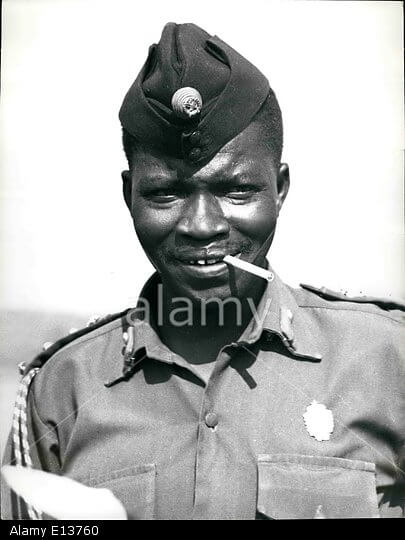
In the early 1960s, before he became the infamous dictator the world would come to fear, Idi Amin Dada was just another ambitious soldier in the Ugandan army. Tall, athletic, and eager to prove himself, Amin caught the attention of foreign allies—including a very unexpected partner: the State of Israel.
A Soldier in Training—and in Favor
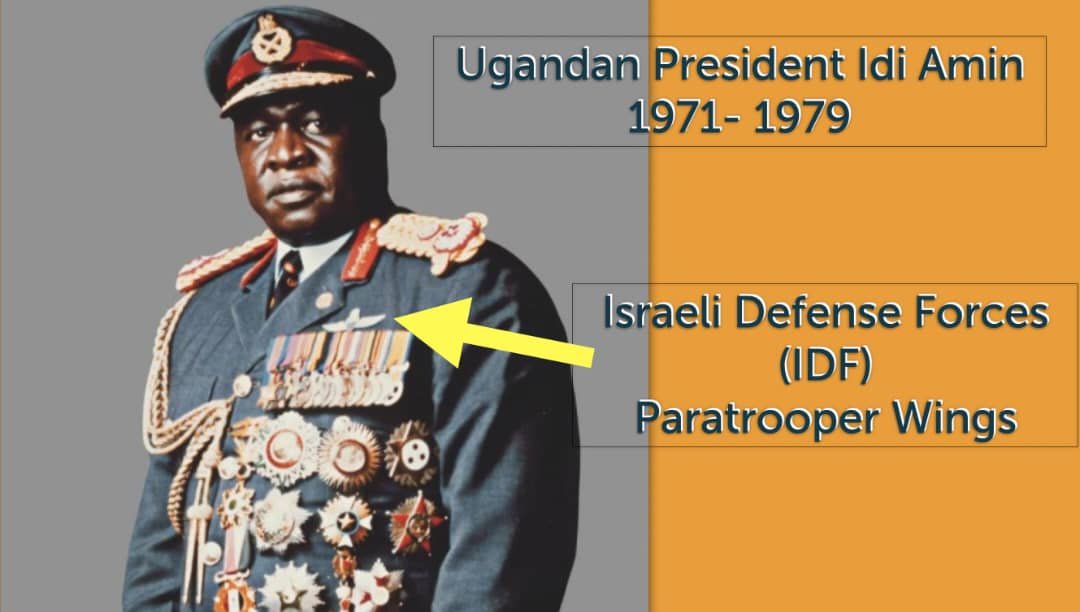
In 1963, Amin was selected for a special military training program under the Israel Defense Forces (IDF). There, in the hot desert sands and military academies of Israel, he earned his paratrooper wings—an impressive achievement that made him one of the few African soldiers at the time to complete such elite training.At that time, Amin bore none of the anti-Semitic venom that would later mark his reign. In fact, he held a certain admiration for the Israeli military, who were then rising stars in the global defense arena. The ties between Uganda and Israel ran deep: following independence, Uganda had signed several agreements with the Israeli government covering cooperation in agriculture, healthcare, and technology. Scholarships were offered to Ugandan students to study in Israeli universities. The friendship seemed strong—on the surface.
A Power Play in the Shadows
By the late 1960s, Amin had climbed the ranks to become Uganda’s top general, holding sway over the military and police. His political ambitions, however, simmered just beneath the surface. Tensions between him and the then-President, Milton Obote, were steadily rising.
A Diplomatic Turn: From Friend to Foe
But power changed Amin. And fast.
Not long after taking office, he began seeking financial and military assistance from his former allies. He boarded a plane for Israel, where he requested a staggering £10 million in aid, the cancellation of debts Uganda owed from the 1960s, and even a donation of Phantom fighter jets.
The response he received was anything but diplomatic. Israel’s prime minister reportedly laughed at the request. “We don’t donate jets,” he was told. “We buy them—from the United States and Russia.” It was a stinging humiliation for a man who had just proclaimed himself the “Conqueror of the British Empire” and believed he was a force to be reckoned with.
Feeling insulted and dismissed, Amin left Israel in a rage and rerouted his journey—this time to Egypt. There, he found a more willing partner in Libya’s revolutionary leader, Muammar Gaddafi. Gaddafi, eager to expand his influence in Africa and promote pan-Islamism, offered Amin both friendship and funding. He began by investing in the construction of the now-iconic Gaddafi National Mosque in Kampala
From Rejection to Rage: The War on Israel
Thus began Amin’s transformation—from ally to antagonist. What followed was a steady descent into radicalism. Amin turned his back on Israel and embraced the Palestinian cause, vowing to rid Uganda of what he called “Zionist influence.”
He ordered the expulsion of Israeli experts working in Uganda, even though many had been involved in vital infrastructure, agriculture, and medical projects. He canceled longstanding bilateral agreements, aligning instead with Gaddafi and the Arab League.
In one of his more bizarre but telling moments, Amin expressed outrage at Christian sermons that referenced the biblical exodus of the Israelites, calling them “propaganda” that glorified Jews. He even took issue with Christian radio broadcasts that mentioned Israel positively.
To solidify his stance, he closed the Israeli Embassy in Kampala and handed the building over to the Palestine Liberation Organization (PLO). In a symbolic move, he allocated 5,000 acres of Ugandan land to the PLO under the 1975 Land Law—legislation that abolished private land ownership entirely, making all land state-owned.