Dangote’s Turning Point: From Importation to Manufacturing
In the late 1980s, a young Aliko Dangote embarked on a journey that would forever alter the trajectory of his business empire. His destination was Brazil a nation grappling with the crushing burden of foreign debt, estimated at nearly $1 billion, the largest of any country in the world at the time. Yet, amid this economic storm, Dangote witnessed something remarkable: Brazil’s manufacturing sector was not only surviving, it was thriving.
During his visit, Dangote toured Arisco Produtos Alimentícios SA, a household name in Brazil then, often likened to the Wal-Mart of Latin America. Arisco was more than just a food chain; it was a symbol of resilience.The company produced an astonishing range of goods—salad dressings, tomato products, canned soups, mayonnaise, seasonings, ketchups, noodles, desserts, bouillons, and more. It catered to the three fundamental human needs: food, clothing, and shelter. Despite Brazil’s economic woes, Arisco’s shelves were full, its factories buzzing, and its people employed.
This experience was an eye-opener for Dangote. He realized that if Brazil, weighed down by debt, could sustain itself through manufacturing, then Nigeria with its abundant resources and vibrant population could do the same. The lesson was clear: true economic independence lay not in importation, but in local production.
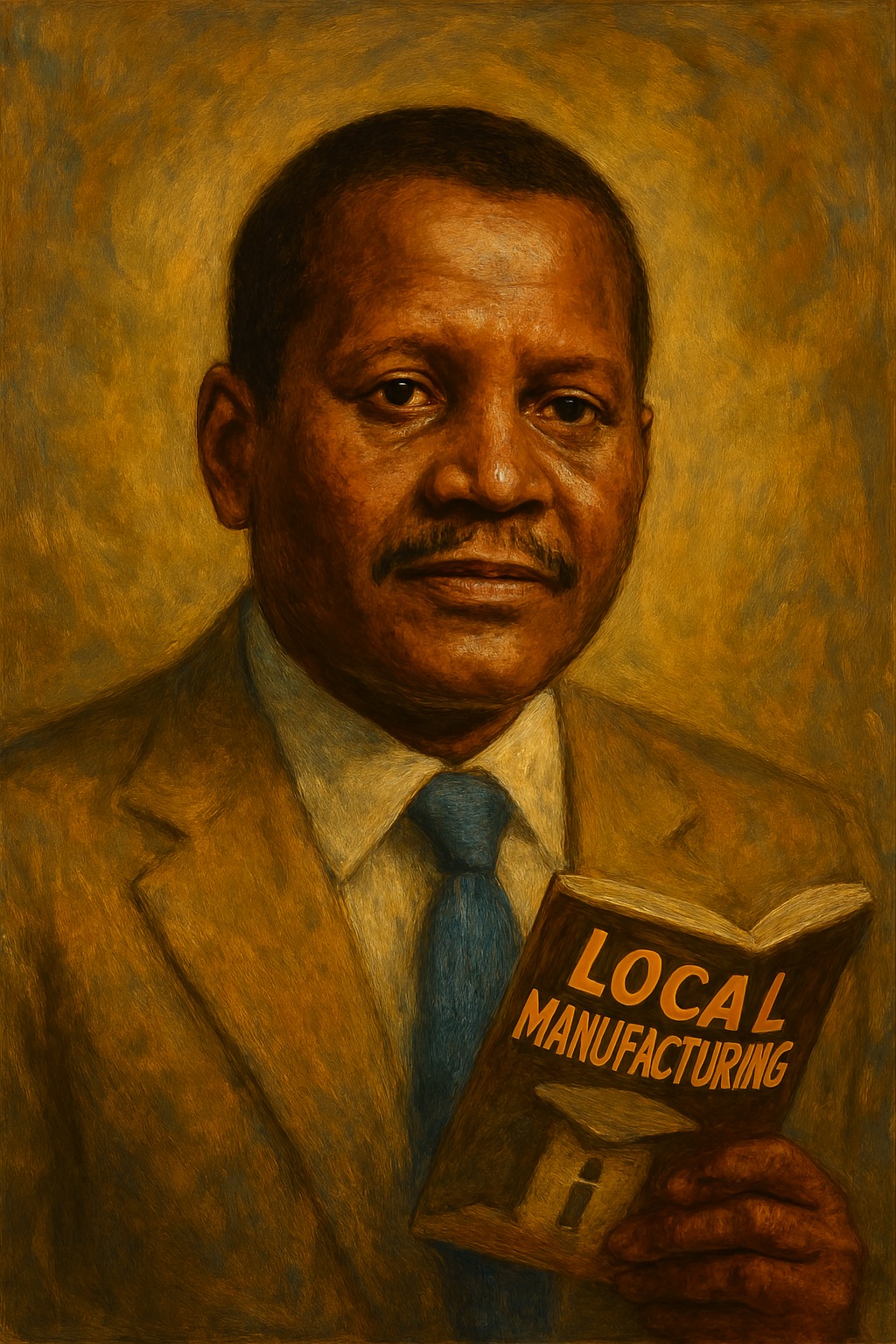
Returning home, Dangote began to rethink his business model. He called it backward integration a deliberate shift from importation toward manufacturing. It was a bold move in a country awash with petrodollars, where government imports dominated the market and local industries struggled to survive. Yet Dangote pressed on, driven by persistence and a vision larger than himself.
The transition was not easy. He faced skepticism, logistical hurdles, and the inertia of an economy accustomed to imports. But Dangote’s determination was unshakable. Slowly, his companies began to pivot, laying the foundation for what would become one of Africa’s most powerful industrial empires.
Today, Dangote Group is one of Africa’s largest industrial conglomerates, with operations spanning cement, sugar, salt, flour, and more. His factories employ thousands, reduce Nigeria’s import bill, and contribute to the continent’s economic resilience.
What began as a factory tour in Brazil became a blueprint for African industrialization.
Closing Reflection
Dangote’s story is more than a tale of business success it is a lesson in vision, courage, and resilience. His visit to Brazil was not just a trip abroad; it was a turning point that sparked a revolution in African manufacturing. By daring to imagine a future where Nigeria could produce what it consumed, he challenged the status quo and redefined what was possible.
Today, his journey reminds us that true transformation often begins with a single moment of insight a spark that, when nurtured with persistence, can ignite an entire continent’s potential. Dangote’s leap from importation to manufacturing is proof that even in the face of overwhelming odds, visionaries can reshape the destiny of nations.
Aliko Dangote didn’t just see a factory — he saw a future. His story is a reminder that transformation begins with observation, followed by action. In a continent rich with resources and talent, the next industrial revolution may already be waiting — in the minds of those bold enough to believe.