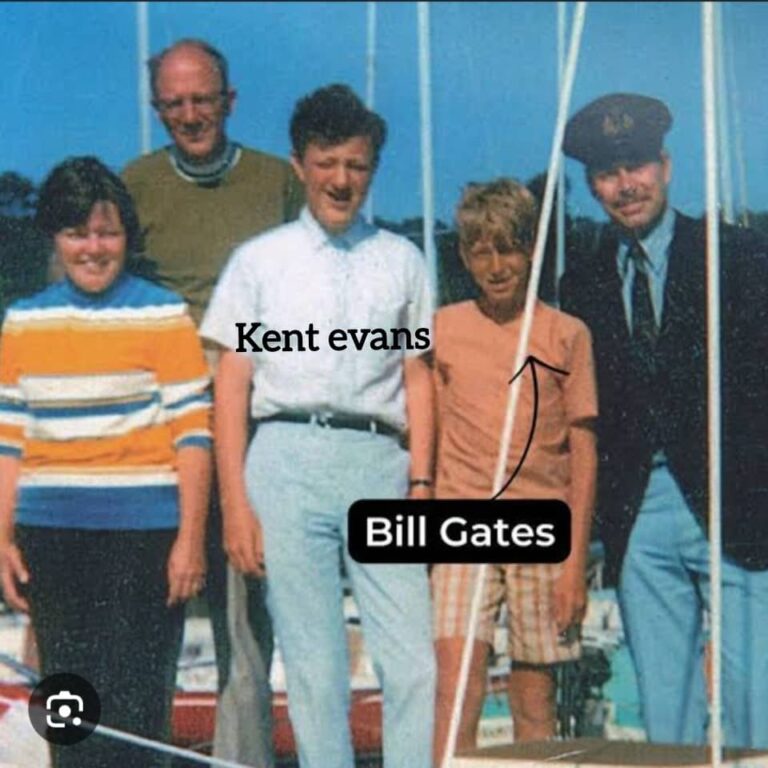
Bill Gates : Harvard School of Risk and Reward.
Before the billion-dollar deals and global philanthropy, before software ate the world—Bill Gates was a student. But not just any student.
While others at Harvard swam through textbooks and lectures, Gates played a different game—literally. In smoky, whisper-filled halls and dorm rooms where poker chips clinked against stolen moments, Gates carved out his real education. The stakes? Thousands of dollars. The lesson? Everything
Risk Isn’t Theory—It’s Lived Experience
Gates didn’t just study risk from textbooks—he lived it. Every poker hand was a heartbeat of calculation, every bet a miniature business decision. He learned to read probabilities not as numbers but as instincts. What he gained couldn’t be taught in a lecture hall: an intuitive grasp of when to leap and when to wait.
Years later, those poker instincts became business strategy. Gates would strike deals only when the conditions favored him, hedging against the unknown with surgical precision—like offering IBM an operating system he hadn’t yet acquired, buying it after they committed. Bold? Yes. Reckless? Never. That wasn’t luck—it was learned logic.
The Mask of Bluffing
Bluffing wasn’t just a poker skill—it was a psychological art form. Gates mastered the balance between silence and signal, learning when to speak and when to let others guess. Bluffing, after all, isn’t lying—it’s shaping perception without breaking truth.
It’s what allows diplomats to broker peace, entrepreneurs to secure funding, and visionaries to tilt possibility in their favor. Gates used it as a tool to protect ideas, negotiate value, and operate in spaces few were bold enough to enter.
In high school, Gates was given programming tasks by the administration. What they got was code, completed. But what Gates saw was opportunity. He quietly altered the schedule database to land himself in a class surrounded entirely by girls. Mischievous? Sure. Malicious? Not at all.
Hacking the System—Literally
What it revealed was his early instinct for altering systems—he didn’t break things to destroy them; he bent them to create strategic advantage. Gates wasn’t reckless; he was a reformer in the making. The kind who doesn’t wait for permission but writes it into the architecture.
Engineering Reality
Gates’s relationship with rules was never adversarial—it was architectural. Where others saw fences, he saw scaffolding. He reshaped limitations into leverage. He played the odds, mastered the game, and then rewrote the rules to suit his vision.He understood something most people never dare confront: success isn’t about staying safe. It’s about learning when the rules serve you—and when to redesign the playbook entirely.