The Fuel Behind Bill Gates’ Fire :Fear of Losing:
Long before Bill Gates became a titan of technology, he was just a boy with a singular fear—not of monsters or the dark, but of losing. For Gates, failure wasn’t an option. It wasn’t even a blip on the radar. In his mind, life was a scoreboard, and he refused to fall behind.
Winning wasn’t just desirable—it was necessary. And this wasn’t about vanity or greed; it was deeper, wired into his DNA. In everything he touched, whether a math problem or a game of Monopoly, Gates needed to win. Not to feel superior—but to feel secure.
The Gates Household: A League of Its Own
In most families, competition pops up occasionally—on game nights or at sibling soccer matches. In the Gates family, it was constant. A way of life. William Sr. and Mary Gates raised their children with a conviction: competition breeds excellence. Losing wasn’t treated with gentle consolation—it came with consequences, lessons, and sometimes payback.
From debates at the dinner table to Sunday board games, the spirit of rivalry coursed through the household. The goal wasn’t just to defeat—it was to improve, sharpen, evolve.
From Code to Cards: Victory Was the Common Thread
Young Bill absorbed this mindset like oxygen. Every program he wrote had to be better, faster, smarter than what came before. Every school race was a challenge, not just of speed, but of spirit. Even fun—if it involved an outcome—was framed in terms of winning.
When he got to Harvard, the battleground shifted—but Gates adapted. Poker became his proving ground. Long nights spent under the haze of tension and strategy weren’t about thrill-seeking. They were about testing his edge.
Money changed hands, yes—but it was the mental warfare that mattered more. Each bluff, each bet, each read of a rival’s hesitation, sharpened Gates’s greatest weapon: his mind. Winning at poker wasn’t about the pot—it was about dominance of intellect.
Victory as Philosophy
For Gates, success wasn’t a destination—it was a reflex. Whether in business negotiations or poker games, he played to win. Always. He didn’t chase money blindly. He chased moments of mastery.
In his world, the smartest player at the table deserved the spoils. And Gates made sure—over and over—that he was that player.
Bill Gates didn’t just compete at poker tables or playgrounds—he built Microsoft as a battlefield. The culture he fostered at the company echoed the intensity of his own upbringing. For Gates, every line of code, every product launch, every pitch—was a contest. Winning wasn’t just about profit. It was proof.
Microsoft: Competition in Every Byte
In its early years, Microsoft was the epitome of a competitive tech start-up—lean, fast, and ruthless in pursuit of market dominance. Gates ran the company with the same relentlessness he brought to Harvard Yard poker games. Developers worked marathon hours. Deadlines weren’t just met—they were hunted down.
His team knew: good wasn’t good enough. “Ship it or someone else will” was the tempo. If someone couldn’t keep pace, Gates didn’t wait for them to catch up—he replaced them with someone faster.
And yet, this drive produced greatness. It pushed the company into the heart of operating systems, making Windows a cornerstone of the personal computer revolution. It wasn’t just business—it was a war of innovation, and Gates wanted to win.
From Competition to Contribution
But something shifted as Gates grew older. The fire of competition didn’t extinguish—it evolved. He began to measure winning not in market share but in lives changed.
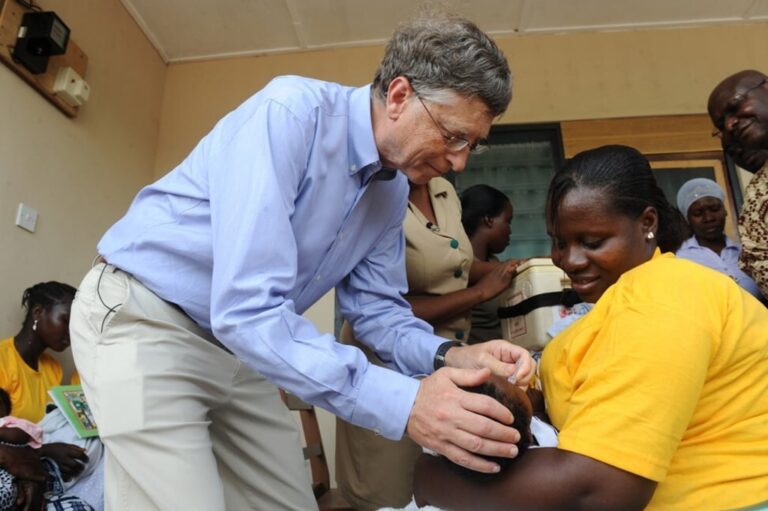
With the creation of the Bill & Melinda Gates Foundation, he turned his obsessive focus toward global health, education, and poverty alleviation. In these realms, the prize wasn’t dominance—it was impact.
Yet his competitive spirit never vanished—it was redirected. The Foundation became one of the most strategically aggressive philanthropic forces in history. Gates deployed data-driven thinking, partnerships, and measurable outcomes to battle malaria, improve sanitation, and transform education systems.The stakes were no longer stock prices—they were survival rates.
Legacy by Design, Not Default
Bill Gates still plays to win. But today, the game is about giving. About leveling the playing field. About ensuring every human has the tools to succeed—regardless of where they’re born.
He’s applying the same principles he learned from poker tables, childhood games, and corporate battles. Except now, the victories belong to others. That’s the evolution of a competitor into a changemaker.