The Birth of Amazon: A Story of Vision and Risk
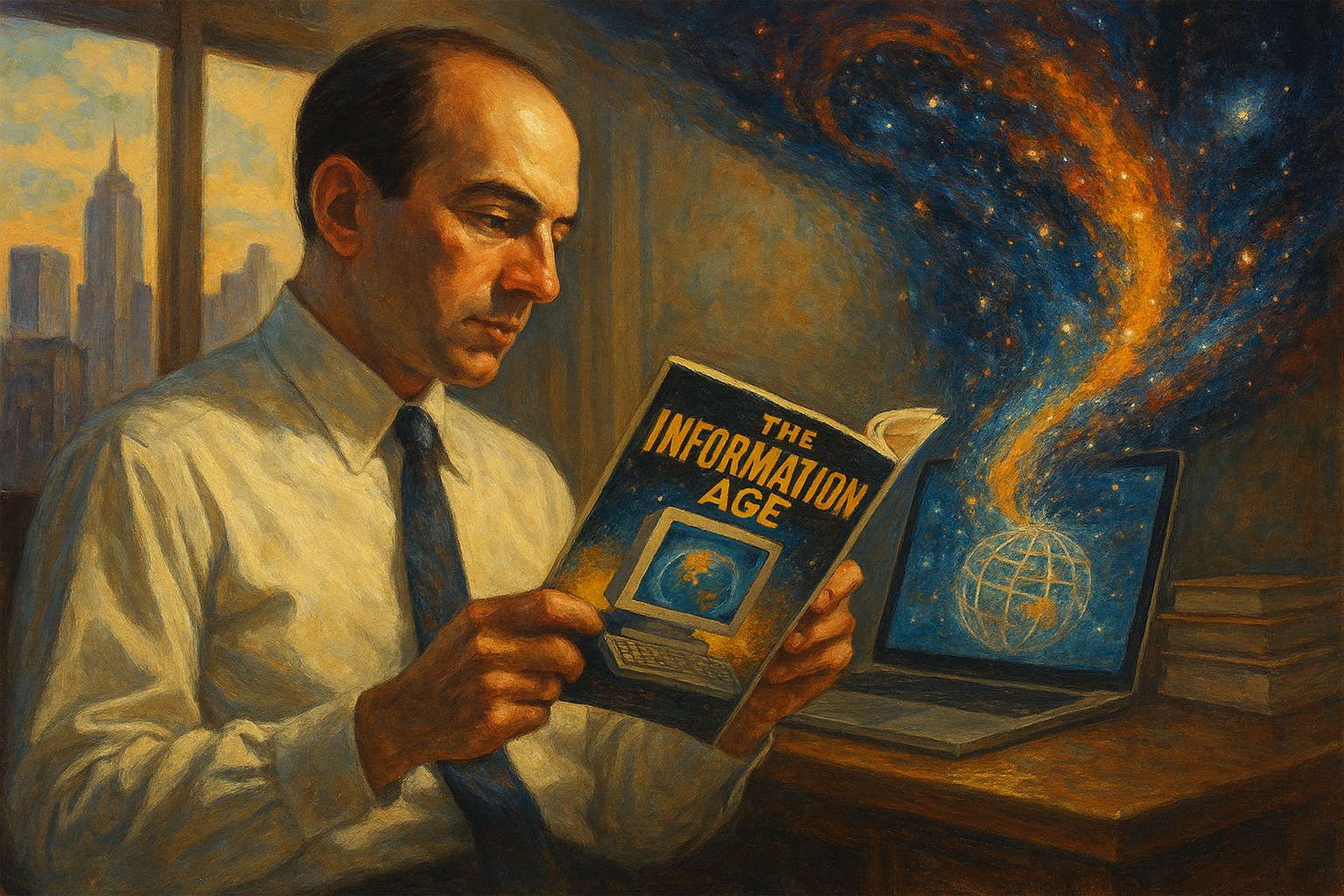
It was the early months of 1995. The air in New York was brisk, Wall Street buzzing with its usual rhythm of ambition and numbers. In a corner office high above the city streets sat a young Cuban‑American businessman, flipping through the glossy pages of a magazine. He was successful by every measure Wall Street could offer — a steady career, colleagues who respected him, and a future that seemed secure. Yet, on that day, one article would change everything.
The piece spoke of something extraordinary: the exponential rise of information in the world. It revealed that computer usage was growing at a staggering rate — by 23,000 percent annually — a phenomenon unprecedented in human history. The author declared that the future of information delivery would no longer be dictated by paper, ink, or even television, but by computers, the Internet, and the World Wide Web. It was, the writer said, the dawn of the Information Age.
The words struck him like lightning. He leaned back in his chair, staring out at the skyline, and realized he was glimpsing the future. While others might have skimmed the article and moved on, he felt something deeper: a conviction that the world of atoms was giving way to the world of bits, chips, and data.
That evening, at home, he could not shake the thought. He paced, mulled, scribbled notes. The more he reflected, the clearer it became — this was not just a technological shift; it was a revolution in how humanity would live, learn, and trade. And he wanted to be part of it.
The next morning, he walked into his office with a decision burning inside him. He drafted his resignation letter. His colleagues were stunned. “You’re leaving Wall Street? For what?” they asked. To them, it seemed madness. But he was undeterred. He had seen something they had not — or perhaps something they had seen but failed to believe.
He returned home and told his wife: “It’s time. We need to move.” Not to another financial hub, but to the far northwest corner of the United States — Seattle, Washington. Why Seattle? Because it was close to two of the nation’s largest book wholesalers, and because it was a city brimming with young, brilliant computer minds. His wife trusted him. Together, they sold their home in New York, packed their belongings, and moved into a modest rented apartment with a garage big enough to house a dream.
In that garage, they set up a few laptops. He recruited a handful of fresh university graduates — computer whiz kids eager to experiment with the new frontier of the Web. Their mission was simple but audacious: to build a digital bookstore. Not just any bookstore, but one that could hold more titles than any physical shop ever could, accessible to anyone, anywhere, at the click of a mouse.
By July 1995, the dream had a name: Amazon.com.
The name itself was chosen with care. The Amazon River, the largest in the world, symbolized scale, abundance, and endless possibility. That was the vision — a store so vast it could one day sell everything. But they began with books, because books were the foundation of knowledge, the perfect product to test the power of online commerce.
At first, orders trickled in. Then they grew. Soon, Amazon was selling tens of thousands of books a day, serving millions of customers across the globe. What had started in a garage became a phenomenon.
The man behind it all was Jeff Bezos. His leap from Wall Street into the unknown reshaped not only his life but the very fabric of global commerce. Today, Amazon is worth hundreds of billions, serving as the backbone of retail, logistics, and cloud computing. Bezos himself became one of the richest men in the world. Yet the true legacy lies not in the numbers, but in the courage to see the future and act upon it.
This isn’t just the story of Amazon. It’s the story of vision, risk, and conviction. It’s about daring to leave behind certainty for possibility. And it began with a man reading an article — proof that sometimes, the right book or article at the right time can change the course of history.One article changed the course of history
Vision matters: Spotting trends early can create opportunities others overlook.
Risk‑taking: Leaving comfort zones is often necessary for breakthrough innovation.